
Why confidential computing becomes essential in the age of AI
Confidential computing has been around for a while, but its days of sitting in the background are over. Previously, it was most relevant to organisations running sensitive workloads, but today it is taking a front seat as more companies tap into artificial intelligence.
At its simplest, confidential computing is about protecting data while it is being processed, not just when it is stored or moved. That made it an infrastructure detail in the past, but it now more central to operational security as we ask machines to analyse, interpret and act on information, not just move it.
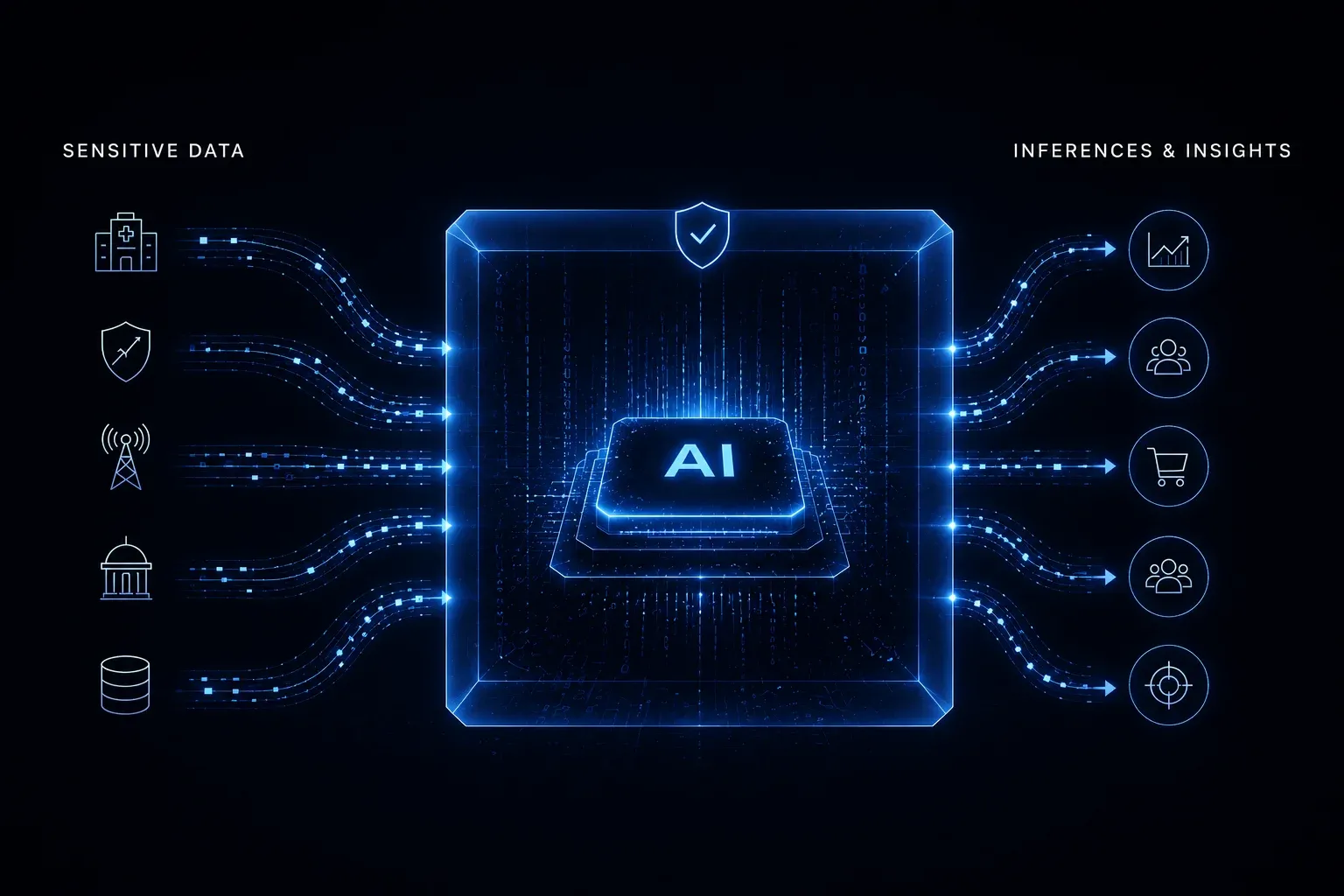
The scope of security has grown from simply protecting the underlying data to protecting what can be inferred from it. That’s because, as we’ve noted before, conversations in AI aren’t private and those interactions are now data to be protected.
A hospital database, a military network or a telecom operator’s subscriber data is sensitive on its own. But the risk changes materially once large-scale computation is applied to those systems. That can reveal operational blind spots, staffing pressures, procurement priorities, customer churn or insights into future planning.
The rise of AI has made established security processes feel almost incomplete. Protecting data at rest and in transit is still important, but for many buyers that is no longer the hard part. The harder question is whether the environment doing the work can itself be trusted.
That is exactly where confidential computing has gone from a niche feature to something much closer to a commercial requirement. Any organisation that processes high-value and high-sensitivity information needs stronger guarantees around the compute layer itself. Not just the data, but the analysis, inferences and strategic intent that can be derived from it.
Sectors where the stakes are high and the margins for error are low are the most obvious for confidential computing. That ranges from governments dealing with citizen records and internal systems, to defence and intelligence organisations working with mission-critical information and mobile operators sitting on vast amounts of network and subscriber data.
Then there are the service providers increasingly handling sensitive workloads on behalf of clients who may be comfortable with outsourcing infrastructure, but not with exposing what that infrastructure can reveal.
In those cases, the problem is very real. If the environment running sensitive workloads cannot be properly trusted, adoption of new technology will slow. Pilots that use AI to unlock insight, analysis or future planning may go ahead, but larger deployments will become difficult. Enterprises are attracted to the promise of more powerful systems, but not if it means exposing the very intelligence that sits at the centre of their business.
So trusted compute has become a major part of what makes modern data-heavy workloads usable in the first place. Without that trust, a lot of ambitious plans are likely to remain somewhere between demo and deployment.
The market is real with Google, Microsoft, Amazon, Oracle, IBM and Alibaba Cloud all offering versions of confidential computing. For many European buyers, however, that does not settle the sovereignty issue. For government, defence, telecoms and other sensitive sectors, going with a US hyperscaler will raise concerns around jurisdiction, control and exposure.
That is where SpaceTime is trying to draw a distinction.
Confidential computing on a European sovereign technology stack is a different proposition from confidential computing delivered through a US cloud platform. For buyers worried about legal reach, vendor concentration or CLOUD Act exposure, that difference may carry real weight.
The modern infrastructure conversation is changing because it is no longer only about raw performance, storage or price. The more valuable the workload, the more it matters who controls the environment and which legal regime sits over it. Buyers also need to know whether the system can be trusted with information that may be more sensitive after computation than before it.
Confidential computing is more relevant than ever now because the value of computation has changed. The thing organisations need to protect is no longer just the data itself, but the intelligence that can be extracted from it. That makes trusted compute look less like a specialist add-on and more like part of the table stakes.